Loading game
Preparing player
Loading game
Ready to play
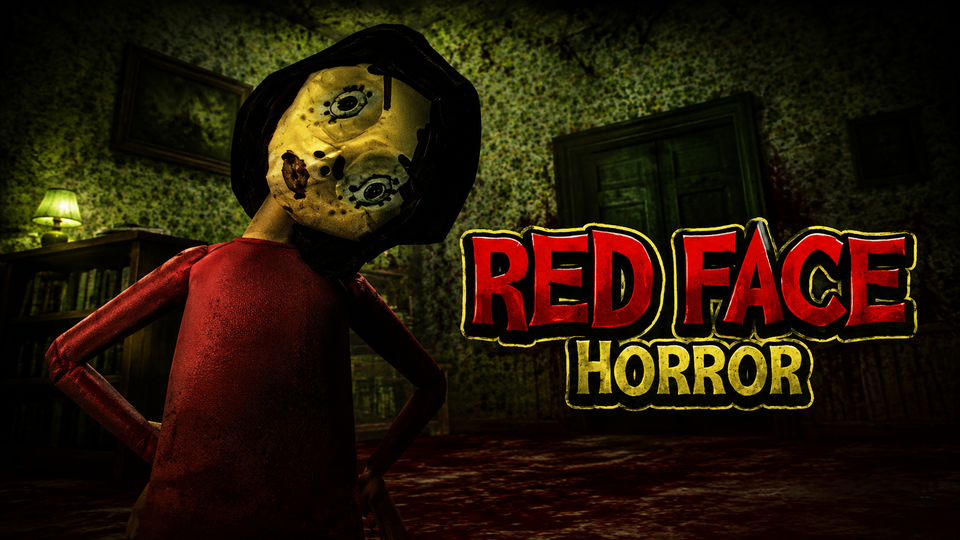
Play Red Face Horror online for free. Explore Ron’s eerie home, investigate strange clues, uncover the truth behind Mr. Red Face, and survive a chilling psychological story.
Red Face Horror is a first-person psychological horror game where fear comes from atmosphere, strange details, and an unsettling story rather than nonstop action. Play as Ron, explore a disturbing family apartment, investigate everyday objects, notice changes in your surroundings, and slowly uncover the truth behind the mysterious figure known as Mr. Red Face.
The game uses quiet rooms, unsettling sounds, visual changes, and environmental clues to build tension. There are no powerful weapons or complicated combat systems to protect you. Progress depends on observing your surroundings, interacting with important objects, following story events, and understanding what is happening inside Ron's home.
Your main objective in Red Face Horror is to explore Ron's home, trigger important story events, examine clues, and gradually understand the disturbing mystery surrounding Mr. Red Face.
Walk through the apartment and carefully inspect each room. Doors, furniture, notes, objects, sounds, and small environmental details can contribute to the story.
Interact with suspicious objects whenever possible. Some interactions provide immediate information, while others may trigger another event or cause something elsewhere in the apartment to change.
Instead of rushing forward, regularly look around rooms you have already visited. The environment can change as the story progresses, meaning an ordinary area may later contain an important clue.
The controls are intentionally straightforward so you can focus on the environment, story, sounds, and subtle clues around you.
Most of Red Face Horror takes place inside a familiar domestic environment that gradually becomes more disturbing.
At first, rooms may appear completely ordinary. As you continue exploring, however, small details begin to feel wrong. Lighting can change, unusual sounds may appear, and familiar objects can take on a completely different meaning.
Move slowly through each room and pay attention to areas that initially seem unimportant. Horror in Red Face Horror often comes from noticing that something familiar is no longer exactly how you remember it.
Mr. Red Face is at the center of the game's mystery.
Ron initially hears about him as a strange figure connected to childhood behavior and rewards. What sounds like a simple story gradually becomes more unsettling as events inside the apartment begin connecting the legend to Ron's family life.
The game does not immediately explain everything about Mr. Red Face. Instead, information is revealed gradually through conversations, environmental details, memories, and disturbing events.
Continue investigating until you can piece together what the figure represents and why the story affects Ron so deeply.
Red Face Horror relies heavily on environmental storytelling.
Instead of receiving every explanation through a traditional cutscene, you need to examine what is happening around you.
Important information can come from:
Observing these details carefully allows you to understand the story more clearly as the night progresses.
Whenever an object appears unusual or interactive, investigate it.
Some items provide story information, while others activate the next event needed to continue progressing.
Do not assume that ordinary household objects are meaningless. Red Face Horror deliberately uses a familiar environment, so important clues can be hidden among objects that initially look completely normal.
If you become stuck, return to previously explored rooms and examine objects again.
Observation is one of the most important skills in Red Face Horror.
A room you explored only a few minutes earlier may appear slightly different when you return. An object may have moved, lighting may have changed, or another interaction may have become available.
These changes are often intentional and can indicate that another part of the story is ready to progress.
Instead of immediately running toward the next doorway, take a moment to look around and compare the environment with what you remember.
Sound plays an important role in creating tension throughout Red Face Horror.
Footsteps, distant noises, silence, environmental sounds, and sudden audio changes can make an ordinary room feel threatening even when nothing obvious is happening.
Audio can also help signal important events or changes in the environment.
Playing with sound enabled makes it easier to notice these details and understand when something around Ron may have changed.
Red Face Horror focuses primarily on slow-building psychological tension.
The game does not depend on continuously placing monsters directly in front of you. Instead, it creates discomfort through uncertainty and through the gradual transformation of a familiar home into an unsettling place.
This slower approach gives you time to think about what you are seeing while simultaneously making you question whether another strange event is about to happen.
The result is a horror experience driven as much by story and interpretation as traditional scares.
Red Face Horror is not built around fighting monsters or collecting weapons.
Your most important tools are movement, observation, interaction, and awareness.
Because there is no traditional combat system, encountering something disturbing cannot necessarily be solved by attacking it.
Instead, focus on understanding the environment and following the events that move Ron's story forward.
The narrative contains information that becomes more meaningful as additional events are revealed.
Avoid skipping dialogue or immediately leaving an area after triggering a scene. Small details can help explain later moments in the game.
If something initially appears confusing, remember it. Another clue may eventually reveal why that earlier event mattered.
The story is designed to become clearer as separate details begin connecting together.
When you cannot find the next objective, returning to a familiar room is often a useful strategy.
Progressing the story can cause new interactions to become available in areas you already explored.
Check bedrooms, hallways, doors, furniture, and other locations again instead of assuming every completed room is permanently finished.
Backtracking is particularly useful after an important conversation or environmental event.
Walking allows you to observe the environment more carefully, while sprinting is useful when you need to move quickly between familiar locations.
Do not sprint through every room during your first visit. Moving too quickly makes it easier to overlook small clues and environmental changes.
Use Left Shift primarily when you already understand an area or when the situation makes faster movement useful.
Red Face Horror communicates much of its narrative through what you see rather than explaining every detail directly.
Ron is experiencing events from a child's perspective, and the environment helps communicate fear, confusion, and family tension without requiring constant exposition.
Objects and rooms therefore have narrative importance beyond simply providing scenery.
Consider why a particular detail is being shown and how it connects with what you already know about Ron and Mr. Red Face.
One reason Red Face Horror creates tension effectively is its use of an ordinary apartment.
A house normally represents familiarity and safety. The game gradually undermines that expectation by making small changes to the environment and allowing uncomfortable events to unfold inside otherwise recognizable rooms.
The contrast between an ordinary home and increasingly disturbing circumstances creates much of the psychological horror.
Do not rush directly toward the next obvious doorway. Look around for objects and details that may contribute to progression.
If something appears important or unusual, interact with it. Environmental interactions are central to the game.
The environment can change after events occur. Occasionally turn around or revisit a room instead of always moving forward.
Changes in sound can signal that something important has happened nearby.
Story information can contain clues that help explain later events, so avoid skipping through conversations.
An object or conversation that appears meaningless initially may become important after another part of the story is revealed.
A new interaction may have appeared somewhere you previously explored.
Once you know the apartment layout, sprinting can make returning to familiar areas faster.
The game is focused on exploration and storytelling. Search for clues and progression triggers instead of looking for weapons.
Red Face Horror works best when you notice its small environmental details. Moving slowly can reveal information you would otherwise miss.
If you cannot determine where to go next, begin by returning to the most recently changed room.
Examine interactive objects again and check doors or areas that were previously unavailable.
Think about the latest dialogue or event and whether it referenced another location inside the apartment.
If nothing appears different, revisit earlier rooms. Story progression can activate new objects in places you have already explored.
Finding clues is primarily about observation.
Move close to furniture, doors, notes, and unusual objects and check whether they can be interacted with.
Look at the edges of rooms and areas that are easy to ignore when simply walking through the center.
After triggering an important event, scan the environment again before immediately leaving.
The next clue may be connected to something that changed only moments earlier.
Red Face Horror creates fear through uncertainty rather than relying exclusively on direct threats.
You spend much of the game inside an apartment that initially feels familiar, but subtle environmental and narrative changes gradually make that familiarity unreliable.
The game combines dim environments, unusual sounds, unsettling visual details, family tension, and the mystery surrounding Mr. Red Face.
Because you cannot solve the situation through combat, the feeling of vulnerability remains part of the experience.
Players looking for constant fighting may find Red Face Horror very different from a traditional survival action game.
Its focus is storytelling, exploration, environmental observation, and psychological tension.
The most important moments often involve discovering what an object means or realizing that something in a familiar room has changed rather than defeating an enemy.
That makes curiosity one of your most useful tools throughout the game.
Red Face Horror combines first-person exploration, psychological horror, environmental storytelling, mystery, and atmospheric sound design into a compact browser horror experience.
The simple controls make it easy to begin exploring, while the story encourages you to investigate carefully instead of running through every room.
There is no complicated inventory-management or combat system distracting from the central mystery. Most of your attention remains focused on Ron's surroundings and the increasingly uncomfortable story of Mr. Red Face.
Players who enjoy slow-burn horror, unsettling environments, narrative mysteries, and games where ordinary details gradually become disturbing can find plenty to investigate inside Ron's home.
Enter Ron's unsettling apartment in Red Face Horror and begin investigating the mystery behind Mr. Red Face. Explore every room, interact with suspicious objects, listen for unusual sounds, notice environmental changes, and follow the clues hidden throughout the story.
There are no powerful weapons to rely on. Observe carefully, understand what is happening around Ron, and continue exploring until the disturbing truth behind Mr. Red Face begins to emerge.
If you enjoy Red Face Horror, try these similar horror, survival, exploration, mystery, and atmospheric games on YaloGames:
LIVE CHAT
No messages yet. Start the conversation.
Log in to join the chat.
Login