Loading game
Preparing player
Loading game
Ready to play
Play Sorry Bob online, control each finger of a clumsy surgical hand, manage blood loss, use tools carefully, and complete chaotic operations.
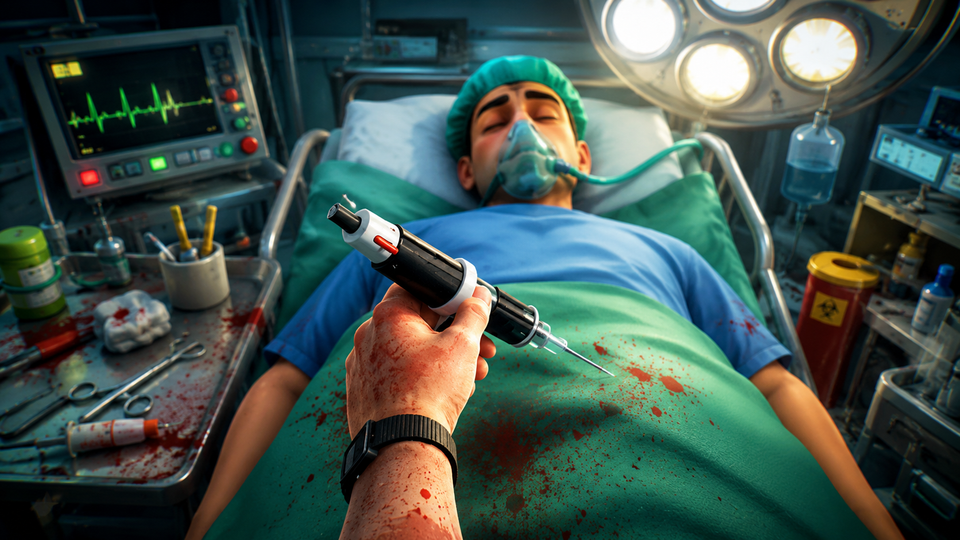
Sorry Bob is a physics-based surgery simulation game where you control one awkward hand and attempt to complete medical operations before the patient runs out of blood or time. Each finger responds to a separate key, while the mouse controls the hand’s position and rotation. Even basic actions such as lifting a scalpel, holding a syringe, or moving an organ become coordination challenges.
The objective is not to perform realistic medicine. Sorry Bob turns the operating room into a precision-based physics puzzle in which unstable tools, loose objects, and difficult controls constantly threaten the procedure. Success comes from understanding the mission, selecting the correct equipment, and completing each step without causing unnecessary damage.
Every operation begins with a specific task, such as replacing a damaged organ. You must inspect the objective, identify the required replacement, open access to the affected area, remove anything blocking your path, and place the correct organ before the patient’s condition becomes critical.
Two indicators place constant pressure on the procedure. The blood level shows how close the patient is to failure, while the timer limits how long you can spend arranging tools or correcting mistakes. Careful movement protects the blood supply, but moving too slowly can leave you without enough time to finish.
Trying to perform several steps at once usually creates more clutter and damage. Finish the current action, release the tool in a safe area, and then prepare the hand for the next object.
The game does not provide a single automatic grab button. You must position the hand, lower it, and close enough fingers around an object to hold it. Releasing the finger keys loosens the grip and can drop the item.
The independent finger system is the main source of difficulty. Closing every finger can create a strong grip, but it may also push a small object away before the hand surrounds it. Using too few fingers makes the tool easier to approach but more likely to slip during movement.
Begin by placing the palm directly above the center of the tool. Lower the hand slowly, close the fingers that naturally surround the handle, and lift only after confirming that the item moves with the hand. If it remains on the table, release the grip and reposition instead of dragging it sideways.
Wrist rotation is useful when a tool is pointing in the wrong direction. Rotate before lowering the hand whenever possible. Trying to correct the angle while the tool is already touching the patient can cause unwanted movement and blood loss.
Hammers and similar heavy objects can help clear hard obstructions, but their momentum makes them difficult to stop. Use short, deliberate movements rather than swinging across the entire operating area. Once the obstruction is open, move the heavy tool away so it does not block access to smaller instruments.
Scalpels and saws require more precise alignment. Approach the intended area from a clear angle and avoid dragging the cutting edge across unrelated tissue. Small movements reduce accidental damage and make the tool easier to recover if the grip becomes unstable.
Syringes can help manage the patient’s condition, making their location worth remembering before the operation becomes urgent. Keep useful stabilizing equipment accessible instead of burying it under discarded tools or removed objects.
Blood loss increases when the patient is struck or cut unnecessarily. A single small mistake may be recoverable, but repeated collisions can rapidly place the operation at risk. Watch the blood indicator after using a heavy or sharp tool instead of focusing only on the next objective.
The timer creates the opposite problem. Moving with extreme caution can preserve health but prevent you from completing the mission. Efficiency comes from preparing the next step in advance. Before releasing one tool, locate the item you will need next and decide where the current object can be placed without causing clutter.
When the blood level becomes critical, stabilize the situation before attempting a complicated movement. A few extra seconds spent controlling the loss can preserve the entire run, while continuing carelessly may end the operation before the replacement organ is ready.
The heart transplant is an early example of how Sorry Bob combines planning and physical control. The procedure requires access to the chest, removal of obstructions, extraction of the damaged heart, and placement of the replacement.
Gripping before the hand surrounds the object often pushes the tool across the table. Lower the open hand into position first, then close the relevant fingers.
Repeatedly rotating left and right makes the hand unstable. Choose an approximate angle before approaching the target and make only small adjustments afterward.
Broken pieces, organs, and discarded tools can obstruct the hand or hide important equipment. Move them away from the main operating area whenever the patient’s condition allows.
Fast, uncontrolled movements often increase blood loss and waste more time than they save. When the timer becomes urgent, simplify the remaining steps and avoid unnecessary tool changes.
Sorry Bob is a first-person, physics-based surgery simulation focused on controlling individual fingers, handling unstable tools, and completing timed operations.
The mission fails when the patient loses too much blood, the available time expires, or the required surgical objective is not completed.
Each finger is controlled separately. You must position the hand and coordinate several inputs instead of using one automatic pickup command.
Not usually. Controlled movements reduce dropped tools and accidental injuries, although you must still work efficiently enough to beat the timer.
Sorry Bob is listed as an AZGames title released on February 13, 2026.
Sorry Bob makes every operation difficult by turning the surgeon’s hand into the central puzzle. The medical objective may be clear, but completing it requires careful positioning, coordinated fingers, controlled wrist rotation, and constant attention to blood loss.
Read the mission before touching the tools, prepare each grip slowly, and keep the operating area organized. Once you can reliably lift, rotate, and release objects, the chaotic physics become manageable and the later Sorry Bob procedures become less dependent on luck.
LIVE CHAT
No messages yet. Start the conversation.
Log in to join the chat.
Login