Loading game
Preparing player
Loading game
Ready to play
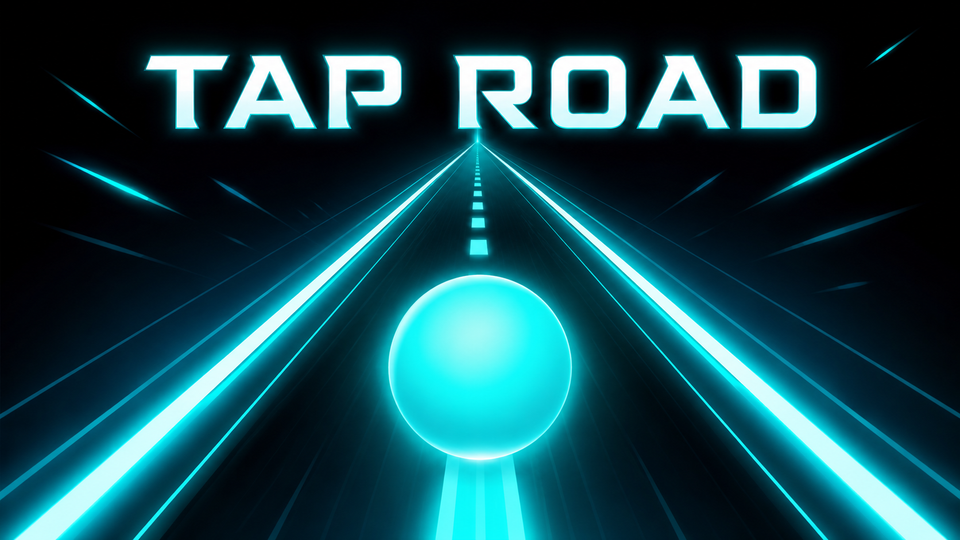
Tap Road is an endless neon ball runner where one tap switches lanes. Dodge obstacles, collect gems, unlock cosmetics, and chase a longer run.
Tap Road is a fast endless runner where a glowing ball moves automatically along a neon track and your job is to switch between two lanes before it crashes into an obstacle. The controls are minimal, but the challenge escalates as the ball accelerates and obstacle patterns give you less time to react. Gems placed along the road add an optional risk-reward layer because they can be collected and used for cosmetic unlocks.
The objective is survival rather than reaching a finish line. Every obstacle you successfully pass extends the run and contributes to your score, while one collision ends the attempt. That makes Tap Road gameplay less about memorizing buttons and more about reading the road early, choosing when to switch lanes, and resisting risky moves when the speed rises.
A run starts with the ball moving forward automatically. You do not control acceleration or manually steer across the road. Instead, each input sends the ball to the opposite lane. Your task is to keep choosing the safe side while the course moves toward you faster and faster.
The ball handles forward movement automatically, so there is no conventional accelerator, brake, or left-right steering system to manage. A single correctly timed input is enough to avoid an obstacle, while an unnecessary tap can place the ball directly into the next hazard.
The numbered obstacles are more than visual decorations. The game's scoring structure is tied to how many obstacles you successfully get past, giving you a clear indication of progress during a run. This also means that staying alive is the most important scoring strategy: a risky gem is rarely valuable if collecting it causes an immediate crash.
Obstacle patterns become harder to process as the pace increases. Early in a run, you may have enough time to notice a blocked lane and switch comfortably. Later, the same decision needs to happen earlier because the road closes the distance much faster.
Gems give you a second objective beyond pure score chasing. They appear on the course while you are avoiding hazards and can be spent on visual customization, including alternative balls and track designs. Current game listings describe a collection of unlockable cosmetic options and challenges tied to continued play.
The important distinction is that collecting a gem and surviving are not always compatible. A gem can appear close to an obstacle, so you need to decide whether changing lanes is actually worthwhile. When the route is already difficult, ignoring the collectible often gives you a better chance of extending the run.
Do not wait for an obstacle to reach the ball before deciding what to do. Keep your attention farther ahead on the road and identify which lane will remain clear. Early recognition turns an emergency reaction into one controlled lane switch.
Because every input moves the ball to the other lane, tapping without a reason creates its own danger. If your current lane remains clear, stay there. Let the obstacle pattern determine your movement instead of switching constantly.
A gem positioned on a safe line is worth collecting. A gem sitting beside a difficult hazard may not be. The same risk becomes more serious later in a run because higher speed leaves less time to recover from a poorly chosen switch. AZ Games similarly recommends treating survival as more important than pursuing every gem.
A rhythm that works during the opening seconds will eventually become too slow. As the ball accelerates, begin processing obstacle positions earlier. The control itself does not become more complicated; the shorter decision window creates the difficulty.
Before switching lanes, check what follows the hazard you are currently avoiding. The opposite lane may be clear for one block but immediately blocked afterward. Planning one obstacle farther ahead reduces rapid corrective taps and gives you a cleaner route.
Late reactions become unreliable once the speed rises. Move when you have identified the safe lane rather than waiting until the obstacle nearly reaches the ball.
Cosmetic progression can make gems tempting, but forcing the ball across the track for every collectible creates unnecessary collisions. Safe gems accumulate naturally over multiple runs.
The ball's current position is easy to track with peripheral vision. Your main attention should be on upcoming obstacle placement. Looking farther forward gives you more time to understand the next switch.
Tap Road does not reward pressing at regular intervals. Obstacles determine when you should move, and their spacing changes throughout the run. Follow the road pattern instead of trying to maintain one rhythm.
Tap Road reduces movement to a binary decision: stay in the current lane or switch to the other one. Games with free horizontal steering let you continuously adjust the ball's position, while Tap Road forces you to commit to one of two routes. That limitation makes obstacle reading especially important.
The neon presentation, automatic acceleration, collectible gems, cosmetic progression, and increasingly fast obstacle sequences support a short-run structure where restarting is immediate and improvement comes from surviving a little farther on the next attempt.
Keep the rolling ball alive for as long as possible by switching between lanes and avoiding obstacles. Passing more obstacles increases your progress and score.
Click or tap to move the ball to the opposite lane. Forward movement happens automatically.
The current run ends immediately after a collision, and you can begin another attempt.
Gems collected during runs can be used for cosmetic content such as different ball appearances and track themes.
Yes. The ball's speed increases as the run continues, shortening the amount of time available to read obstacles and switch lanes safely.
Tap Road turns one input into a demanding reaction challenge. The ball moves by itself, so success depends on reading the two lanes, switching before hazards close in, and avoiding unnecessary moves as the speed increases.
Look beyond the nearest obstacle, collect gems only when the route remains safe, and adapt your timing as each run accelerates. Consistent lane choices will usually take you farther than frantic tapping.
LIVE CHAT
No messages yet. Start the conversation.
Log in to join the chat.
Login